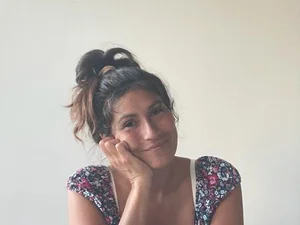
I met Susanne in on the BTC Prague in June, a good friend of mine introduced us because she has the Fix the Family podcast where she speaks about ‘being free with children’.
We speak German but I translated and transcribed the interview (in these moments I’m so grateful for AI!!!), so whether you speak German or not or want to practice it or not ;-) here’s the recording:
English transcription
[00:43] Susanne: So, today I have another interview for you, and I've invited Sylvia. She's a full-time mum and lives with her family on Madeira. Her life is mainly about freedom, connection and joy. She's the founder of A Place To Be, a place under construction – a village under construction, sorry – a community for families who want to raise their children free and in nature, following the principle of "live and let live".
[01:15] Susanne: I met Sylvia in person for the first time in Prague, but a friend had already sort of connected us before that. We're mainly going to talk about this project, A Place To Be, but of course also about her path there, why she's now on Madeira and how she shapes her life with her children. I find it incredibly fascinating and I'm really excited to hear everything you're going to tell us, Sylvia. Lovely to have you here.
[01:42] Sylvia: Thank you. I'm happy to be here.
[01:44] Susanne: Great. My first question is always: tell us a bit more about yourself. Who are you? Who's your family? And what exactly do you do?
[01:54] Sylvia: Yes, I'm Sylvia. I was born and raised in Germany, but my mother is Peruvian, so I've always been a bit of a mix. I have two children, two daughters. My husband is Rob; he's a kind of mental, mind-body coach. We've lived on Madeira for four years and we have a really wonderful life. That sounds strange, but we just totally enjoy our life, because – I think that's the be-all and end-all – because we always follow our hearts. We never put our children into the system. They've never been to kindergarten or school. They really learn 100% freely. The older one turns ten at the end of the month and the little one is six. And it just works really well. It's an enormous amount of fun.
[02:49] Sylvia: We're actually together almost 24 hours a day. Of course they're at friends' places sometimes, or I have something to do, but otherwise we spend a lot of time together, and we all really enjoy it. Because most people always think: the kids have to go to school so that I get some time for myself, and when will the holidays finally be over, and so on. I don't know that feeling at all. Because for us it's basically always holidays and never holidays, since they're never at school or anywhere. I never send them anywhere; they decide freely: they want to play with this child or that person, maybe they want to go somewhere, or someone comes over, or they do their little projects. And it's exactly the same for me. I live exactly like the two of them. I follow my heart; I do what I enjoy. And family is the biggest part of that. That's my priority.
[03:42] Susanne: Lovely. That already sounds absolutely fantastic, and it's exactly what I want to show my listeners here: how you can live completely differently from the norms most of us live by here in Germany. But tell us: you say you grew up in Germany and you've been on Madeira for four years now. How did you get there? Did your husband have something to do with it? Where did you live before – still in Germany? Because if your kids are already six and ten, you must have moved to Madeira together. Just take us along a bit on your story, or your journey – in this case you really can call it that.
[04:22] Sylvia: Yes, our daughters have actually never lived in Germany; they've only ever visited. I emigrated when I was 20, went travelling for a while, then went back to Germany for two years to study, but to a different part, right down in the south. I'm from North Rhine-Westphalia. I met my husband in Barcelona. We lived there for eleven years, and our older daughter was born there in 2016. And even though we really, really like Barcelona – always have – we spent a long time looking for something better: a bit more green, a bit quieter, a bit safer, better for families. Because there are an awful lot of families there, but most of them are 100% inside the system.
[05:13] Sylvia: At the beginning we still had a few friends who didn't send their children to nursery straight away at one or two, but waited until two and a half, three or so – preschool. So we always had friends. But even though Rob and I were never really in the system – working nine to five – we always worked from home and had a lot of freedom to arrange our time the way we wanted, you still feel this energy around you from the people who get up in the morning, get the kids ready and take them to nursery or school. Because mothers get six months of maternity leave, then the children have to go to nursery at six months, then the parents go to work and come back in the evening. And then they don't go to bed until eleven or twelve, children included, because in Barcelona people don't eat until 7 pm. That was never my thing. I've always been an early riser and early to bed. And that's what we did, and it worked.
[06:17] Sylvia: But as I said, you still picked up on it: the rush, the stress, the time pressure. And inside I always had a kind of motor running, constantly. I always did a lot, and I liked doing it – organising a lot, bringing people together, that sort of thing. But thanks to my husband I became aware – because he pointed it out to me – that I was constantly doing, doing, doing, even though I didn't have to. And those are things we've done together from the start, or rather he brought me into it: this "look inside, slow down, look at what you're doing and why", questioning things and so on.
[07:08] Sylvia: Okay, I've drifted off a bit now. But anyway: when Lima was almost three and I was pregnant with Bo, our second, we decided to move to England. That was really the only reason – because we could live wherever we wanted – we were offered the chance to live in a lovely big house with a garden, right at the edge of the woods, in a pretty little town in England. We said yes: simply a change of scenery, and finally that step out of Barcelona; otherwise we'd probably have stayed there even longer. A great time, but we were looking for something different.
[07:43] Sylvia: Bo was born in January 2020, and that's when Covid started. We'd only been in England for nine months. We had friends, we had a teeny-tiny community. But Lima was three, and then the question was: should she go to kindergarten now? Because right on our street there was a kindergarten that people said was the best kindergarten, because through it the children get into the best school and then have the best opportunities in life.
[08:24] Sylvia: I was always a bit sceptical, because from the very beginning I'd always kept my children – or Lima – very close to me. I never put her into childcare. I enormously enjoyed exploring the world with her and simply watching how she discovered and explored the world, just being there. I always saw her like a person from another culture getting to know our culture: lots of patience and explaining everything. And it was a really, really wonderful time, just the two of us, always outdoors and out and about a lot.
[09:01] Sylvia: And then, when we visited this kindergarten, I noticed that Lima didn't want to at all. Of course she liked being with me, because I'd spent a lot of time with her since she was born. And as I said, we did a lot. She didn't have a boring or isolated life; she always had friends, she always had me, and Rob worked from home. He was around all the time too – not literally 100% of the time, but we'd see him every few hours. Then we visited this kindergarten and I noticed Lima was like: do I have to stay here all alone at some point? I asked them: can I stay here until she's used to it, until she … – Music's playing now, sorry, [unclear].
[09:55] Susanne: No problem, it's nice too.
[09:59] Sylvia: Yes. I'd asked: can I stay with her, accompany her until she feels comfortable without me? And she said: "No, you drop her off, she'll cry, and then she'll get used to it, it'll all be fine." And I almost started crying. And then I said: no, that doesn't have to happen. Just because the system, or our society, says it's time for Lima to go to kindergarten, and all this planning – you put your child in there because in the future this and that. It was like: but I want to spend time with my child, and she wants to be with me, she doesn't want to be alone at all, and we have lots of fun, and she has friends.
[10:37] Sylvia: Since her birth, or since I was pregnant, I'd started reading about parenting and raising children. And it always went a bit in the alternative direction, because I was actually raised very alternatively myself. That's why we had home births, and why I breastfed Lima until she was three and Bo until almost six – five and a half.
[11:03] Susanne: Okay.
[11:04] Sylvia: And yes, we still co-sleep, and just exactly the kind of thing people would call alternative. And then I read, I think, just one sentence in a book about homeschooling. And in Germany it doesn't exist at all. It's frowned upon and illegal …
[11:25] Susanne: Above all, exactly, above all forbidden.
[11:27] Sylvia: Yes, exactly. They take your children away, or threaten you with prison, or you have to pay heavy fines. So my first thought was: okay, interesting, this exists. And that was the first thing – getting out of this system mentally – the first step as far as kindergarten went. Because before that I'd already done everything very freely, outside the system. And in that moment I said to Rob: you know what, Lima will never go to kindergarten or school. I just decided it. And at first he was like: okay, but how and why and what? All those questions, of course, because he hadn't read anything about it yet.
[12:11] Susanne: Do you remember what you read back then?
[12:16] Sylvia: I think it started with – oh gosh, what were they called? "How to listen and how to talk to children" or something. Something like that. I can look it up.
[12:32] Susanne: Sure, feel free to send it afterwards. Maybe it'll be a source of inspiration for other parents too, if it grabbed you like that. It sounds really interesting.
[12:41] Sylvia: Two authors. "How to listen so kids will … how to talk so kids will listen", something like that. I think I read two of their books.
[12:55] Susanne: Yes, I have a vague feeling I've heard of it, but yes.
[13:00] Sylvia: Yes, exactly. And then I made that decision, and I kept sending Rob little excerpts, because I kept educating and informing myself about these topics. Because once I'd made that decision, I also knew: now I really have to know what I'm doing. And then I read more and more in this direction: homeschooling, then it moved into unschooling, and simply free learning.
[13:28] Sylvia: Right. Then Bo was born, and a few months later we got out. On the Tuesday we booked a flight for Thursday to Mexico – no, to Cancún, sorry – to, uh, what was it? – Havana, Cuba.
[13:45] Susanne: Whoa.
[13:46] Sylvia: Because we didn't want to be locked in. They'd said the borders would be closed and everyone would have to lock themselves in at home. We didn't want that. So we said: we're out of here. After a week Rob saw that he couldn't work there, because they'd only got internet, or Wi-Fi, about two years earlier, I think.
[14:04] Susanne: How on earth did you end up in Cuba of all places?
[14:10] Sylvia: I don't remember anymore.
[14:11] Susanne: That's crazy. I've heard of Mexico more often, I know other people who went there, but Cuba is wild.
[14:18] Sylvia: Yes, from there we then … to Cuba. I don't know. It was somehow another coincidence, like …
[14:26] Susanne: Okay. Fate. A nudge from fate.
[14:28] Sylvia: Yes. Yes, that's actually where it started. That was once we'd made the decision: okay, we need a change, we're going to England. Then it came all at once, these strokes of fate. Covid was like a stroke of fate: off to Cuba, then a week later to Mexico. In Cancún we spent four and a half months completely free, by the pool, on the beach, got to know new people, and we simply didn't let anyone scare us; we hugged people and just had a lovely time.
[14:59] Sylvia: Lima spent every day in the pool there, and she learned to swim. And that's where I saw how this free learning works 100%. Because, for one thing, there were all the iguanas running around, and we saw everything: how the males fought over the female, how they mated, then how they laid their eggs, how the eggs hatched. We saw the whole cycle, experienced all of it. And then exactly the same with the turtles: they mated about 100 metres from the beach. Then the mothers came and dug holes to lay their eggs in and went back into the water. Then we saw the eggs hatch. I even have photos and videos of Lima and Bo holding the teeny-tiny turtles in their hands and then releasing them into the sea.
[15:56] Susanne: So the kids were about five and one then, or what?
[15:59] Sylvia: No, not yet. Lima was three and a half, and Bo was a few weeks old – six weeks – when we flew to Cuba. So she wasn't even half a year old when we left Mexico. And Lima was almost three and a half.
[16:15] Sylvia: Right. Then we went back, briefly into quarantine in England. And then came the news that my father, who lived in Barcelona, had had a heart attack, and he had actually been clinically dead for 20 minutes. He was resuscitated, then lay in a coma, and so we went to Barcelona. It was like life had shipped us back there. And we spent 13 months there in the house with him and my brother, because we said we'd stay until he could stand on his own two feet again. And that's how it went.
[16:51] Sylvia: After 13 months we said: okay, time to move on – but where to? And all our friends knew we were looking for a new home where we wanted to settle down, more or less. We knew we'd always keep travelling, but yes. And then lots of people told us: Madeira, go to Madeira, you'll love it. And Rob, my husband, said it happened to him twice: he was just standing somewhere, people walked past him and said "Madeira". The sign.
[17:22] Sylvia: And the other funny thing was that we'd actually planned to fly to England to clear out our household and just pack what we wanted to keep. But of course Covid times said again: you have to quarantine. If you want to go from Spain to England, you have to quarantine for two weeks. But if you fly from Portugal to England, you don't. So we said: fine, then we'll go on holiday to Portugal for two weeks, let's do Madeira and have a look. We ended up staying two months and knew straight away: yes, this is it, this is where we're moving. But first we went to Germany for half a year, because we hadn't been there for a long time – nobody there had met Bo yet. And then, I think in July, at the end of July four years ago, we moved to Madeira. That's how we got here.
[18:20] Susanne: Okay. Long story.
[18:21] Sylvia: A long story with lots of detours.
[18:24] Susanne: I see. So what was it about Madeira that won you over straight away? I know it myself – I was there for a week with my mum once. That was a few years ago, but I also found it very, very beautiful. But it's also very steep, and it's an island. So there are things where you'd say: but … What was it that made you so sure: this is it?
[18:48] Sylvia: Well, first of all it's stunningly beautiful. It's very green – that's what we wanted. It's extremely safe; there's almost no crime here. And this energy – it's just pure calm, because the people are all extremely relaxed and easy-going. You won't find anyone running somewhere because they'd otherwise be late, the way I do. They just walk. I think it's because of the mountains – that's my theory: you can't run up a mountain. They're used to walking up the mountain slowly, and that's how they do the rest of the way too. Whether it's downhill or flat, everything is done calmly.
[19:29] Sylvia: And I have so many examples. Once we almost missed a flight. Oh God, I was going 200 km/h in a taxi through the rain to the airport, because first they said our flight would be cancelled because of the storm and rain, but in the end our plane could land after all. And we went – it was Lima, Bo and me – we raced there, and I looked at the clock: it leaves in five minutes. And we still had to get through check-in, and everyone was completely relaxed. I'm like: "I need to get through here, our plane leaves in five minutes" – "Okay, take it easy." He opens up and lets us through. The next one the same: "We still have four minutes, so everything's fine, please go ahead."
[20:07] Sylvia: And then we got to the security check, and I said to Lima: "Lima, you stay with Bo. You run as fast as you can to gate number – no idea. I'll run ahead to tell them we're here." And Lima said: "I told Bo: just let yourself fall, I'll drag you behind me." I don't know, she was six or so and Bo was three. Because I sprinted there like the German in me who must never be late. And I said: my children are coming now. And it was like: "That's fine, please board the plane" – all completely relaxed. So yes, that's just one example of many. They're so deeply relaxed. It's really lovely. It helped me switch off that motor for once, so it isn't running all the time.
[21:05] Sylvia: Then: the weather is great all year round. I love heat, but Barcelona was pretty intense sometimes in summer, and it also got cold in winter. And here it's just steady. We're still in skirts and T-shirts and shorts, sweating, and we can still sunbathe on the beach. And we can do that in winter too. I remember the first winter I tried putting on jeans or a jumper, but it didn't work – it was too warm. Then the winters got a bit colder, and now we also live a bit further out, not in Funchal anymore but more in the west and a little bit higher up. So it does get a bit cooler there in winter, but yes, the weather is great.
[21:45] Sylvia: Then the view: you have the sea all the time, wherever you go, because you're always somewhere higher and higher, so you always have a great view. And I like the language. It was a bit of a joke at the beginning: it ticks all the boxes except one. If I had to complain, I said at the start, I'd say: I can't play beach volleyball here, because the beaches are mostly stone. And we really were only a ten-minute walk to the beach from the flat we lived in, and then one day I went around the corner and suddenly I saw sand with a beach volleyball court. Yes, Madeira is perfect. Really, and it keeps getting better, because I speak the language and I can talk with people. They're super friendly and helpful. You walk down the street and say hello to people you don't know, like you know it from a village. But yes, it's just incredibly beautiful here.
[22:43] Susanne: Okay. And this feeling of being on an island, where, if it comes to it – like you said earlier, there are storms sometimes – you might not be able to get away, and so on: that's not an issue for you at all?
[22:58] Sylvia: Not at all. No, we generally have the feeling that we want to stay here for now anyway. We haven't travelled that much since we've been here. And I think there was one time we couldn't land and had to circle a few times, and then we landed. So we've never had problems. I hear a lot from other people that it's happened to them, but it doesn't bother me at all. For me the island is big enough. I like the mountains too. So it doesn't bother me at all. I just take the positive: it keeps you fit, and the kids too – they run. It took a few weeks. They moaned so much at the beginning: "I want to be carried. I want a car, I want a taxi, I want to take a bus." – "No, walk." And after two weeks they were walking up the mountains.
[23:49] Susanne: Oh wow. So that's also something you really do get used to and accept the way it is.
[23:54] Sylvia: I did. Well, yes, there are people who don't like it. Some have moved away because they can't drive here. The roads are too narrow for them, and then there's a drop. It doesn't bother me. I like it. I enjoy driving here.
[24:09] Susanne: Cool. Okay, then let's step into your everyday life a bit, so to speak. You said ten and six – that's the age when, normally, for primary school, reading, writing and arithmetic are a huge topic in most families. How do you handle that, since you've been there? These are exactly the four years the older one would have spent in primary school, and she's spent them on Madeira. And the little one would be starting school now, which presumably isn't on the agenda.
[24:43] Sylvia: Yes. No, they don't want to. I suggested it once. The only reason I'd consider school, if they wanted it, would be to learn the language. That's the only reason, because there they'd probably speak fluent Portuguese within three months. But they don't want to. They say they don't need it. And they're among Portuguese people every day – not for hours on end, but I know it's in there. Lima, the older one, understands a lot, because my mother isn't with us all the time, but when she is, she speaks only Spanish with them, and they pick it up really quickly. And Spanish and Portuguese are very similar. So I know they'll learn Portuguese at some point, because they'll make that decision, because they'll find a reason to really speak the language well.
[25:29] Susanne: Yes. And you speak German in the family, or English?
[25:33] Sylvia: I speak German with the two of them, and I speak English with my husband. My husband speaks English with the two of them.
[25:37] Susanne: Yes. Okay. So they're growing up three- to four-lingual, basically.
[25:41] Sylvia: Roughly. Two fluently, [unclear] fluently. And Spanish – that goes so fast: my mother arrives today, and within two days they'll already start answering in Spanish. That's how it always is.
[25:55] Sylvia: Yes, learning. The thing is: most people who went to school themselves and whose children are in school think that learning only happens at school, or only when someone teaches you something. But what I've now seen with my own children, and read countless times in all these books, is that children learn almost everything completely on their own. And it's also a good way, a very effective way, because this learning by doing really sinks in. It's not just reading; your whole body is involved.
[26:35] Sylvia: And I saw it: Lima – I don't know when it started, maybe at two or three – kept asking: what letter is that? What does that say? And in our society it's everywhere. You've got placards or posters or signs, books. It's really hard to stop children from learning to read and write, even if you don't put them in school, because they're simply … curious – what's the word?
[27:05] Susanne: Neugierig.
[27:06] Sylvia: Neugierig, exactly. They're curious, and they want to be able to do it and to understand what the adults are doing. And when I'm reading something, she wants to be able to do it too. So since she was, I don't know, two or three, she's been asking constantly. And since I was always with her, I could answer all these questions. And it was really always just: what's [unclear]? What does it say there? "Exit." What's this here? And how do you write that? And at some point she started doing it herself. Like I said, it didn't start at six with her being able to read or write at eight, the way it happens in school; it was a long, natural process in which she simply asked questions. And these questions are things she's genuinely interested in. She doesn't ask so that I'll think … well, you know what I mean. The question simply comes out of her. That's what she wants to know.
[27:59] Susanne: She doesn't want to impress you or make you proud, the way that so often happens in connection with school; it's really her own interest.
[28:07] Sylvia: Exactly. And then I know: when she asks me a question, she listens, and it stays, it sticks. Same with Bo. I see that every person is different, every child is different. Their characters are different and they learn differently. And I know them, I know their learning style, so I can always adapt. Lima is more like: I'll do it myself, I want to do it alone. And with Bo I can help a bit, support or explain something, and she's open to that.
[28:37] Sylvia: The kids have a friend who turns twelve in November, also homeschooled her whole life. They tried one school year but didn't like it. And she's totally into workbooks; she does the books, all of them. She thinks it's great – mine don't. Since she was two or three, I've always had something lying around in case she wanted it, but she doesn't. She learns completely freely, simply through her projects. I call them projects, but for her it's just playing. She says: okay, now I'm writing a letter to Abuela, that's my mother. Now I'm writing a sign for my door. Now I'm writing the shopping list. And it's not something that happens every day, but always just like in normal, real life. I don't write every day now either, the way I did at school; I write something here and there. And I think that's important too, because when we do it, they want to be able to do it as well.
[29:37] Sylvia: And yes, it's this thing: they learn everything from you, they soak up everything like a sponge, what you say, what you do. But what counts more is what you do, what they see, rather than what you say. So if I want my children to learn something, I have to learn it and then apply it, and that's how they soak it up. Because I once bought a book about these "fallacies" – I don't know what that's called in German, do you?
[30:06] Susanne: I don't know either right now.
[30:07] Sylvia: It's about when people talk to you in a manipulative way, or this gaslighting and so on. And it says: that's a fallacy. I think it's a kind of … I don't know, I don't want to say anything wrong … manipulation or something. Just understanding what people are doing when they talk to you, so that you don't let yourself be manipulated. Or so that you understand what they're doing, what they want, when they have an agenda, a hidden motive, to steer you.
[30:43] Sylvia: And I ordered a book like that, but for children, because I thought I'd probably understand it better. I never intended to read it to my daughters; instead I said to my husband: if we want them to learn this, then we have to read it and apply it, and always point out to each other: what you just said, that's this or that fallacy.
[31:02] Susanne: Yes.
[31:03] Sylvia: Yes, exactly. Those are the kind of things. I know that whatever I want them to do or learn or not do – like social media – I have to do the same myself. I simply have to be a good example.
[31:18] Susanne: Very good.
[31:19] Sylvia: And that's how they learn completely on their own, simply by asking questions and trying things out, and fun – because it makes sense to write this right now. Exactly the same with numbers and maths. Lima – I've never sat down with her or given her a book and said: here are the times tables, learn them by heart. Never. Everything simply through questions: what's 5 + 5? 10. What's 10 plus such and such? I just always answered, and then she expanded the whole construct further in her brain.
[32:00] Sylvia: At the beginning they got a bit of pocket money. We stopped that, because for me it's important that we already do things today the way they'll be later for them: that they already help with everything in the household, that they take responsibility for their things and their actions, what they do. So if something falls down, they clean it up. Their toys, their clothes – they do all of it themselves. They help wash the clothes and hang them up, they help clean everything, and the animals – everything is really just like it'll be later.
[32:36] Sylvia: And the same with money. I thought: nobody's ever just going to give them money. And it was a funny reaction too, showing how different the two of them are. When we told them, we said: you're not getting pocket money anymore, for this and that reason, but you can earn money. You don't get money for housework, because that's simply part of life. You'll have to do it yourselves later, or pay someone to do it. But for example washing the car, because I pay someone else for that. I pay something like €25, and I give them €20 if they wash the car together, clean it inside and out. And I still help, but at some point they'll do it on their own. Or massaging feet, or: make me an offer. What do you need money for right now, what can you do? You know.
[33:21] Susanne: Yes.
[33:22] Sylvia: That's how we do it, for anything we'd otherwise tend to pay someone else for. They can do things like cleaning windows, tidying up the garden, that kind of thing.
[33:31] Susanne: Yes, cool. Yes, I see.
[33:34] Sylvia: And this reaction: Lima, when we said "but you can earn money" – that's all she heard. She didn't care that she wasn't getting pocket money anymore. And Bo was a bit like: how am I supposed to get money now? And she sat down on the floor, made herself a sign – "Mum, how do you write …?", I don't remember what she wrote on her sign – and sat in the living room like a beggar with her [unclear, possibly "little pot"]. And Lima said: "Mum, what can I do? What do you need?"
[34:07] Sylvia: And Lima really did start walking dogs at eight and charging for it. It was a little business she ran with her friend, where every week … there was so much learning content in it. Writing things down: the date, who walked the dog, who gets how much, adding it all up, who gets how much. And then she has to split it with her friend, and then they went shopping together with the money, and they had to calculate there too: what does this cost, and this and that. Completely simple, but they loved it so much – everything: really walking the dogs, they love dogs, getting the money. Often I received the money, or he transferred it to me, the client with the two dogs, and I paid it out to them. And the look on their faces when they got their €50 or so: so proud, and "Wow, that's mine, and I earned it." That was really lovely to see.
[35:11] Susanne: Yes, great. Really cool. Lovely, lovely story, thank you. Now, if you think further ahead – you probably won't follow any set curricula. But do you have thoughts about how their education will continue when things get more demanding? Or isn't that necessary? Do they only need to be able to cope with everyday life and earn money – they'll pick up what they need to earn money somehow? What's your current thinking? It can all still change, of course.
[35:55] Sylvia: Well, for one thing, it's very hard to predict what the future will look like, in terms of work. That's also part of it: we never put them into the system. And what school does is prepare children for the system, so that they work there, nine to five or nine to six, and get paid by the hour or by the month, and then they have their holidays, and when they're ill they have to go to the doctor. And we don't want that for them at all. We just want them to live as freely as we do now, the way they do now: that they simply follow their hearts and do what they enjoy. And you can earn money with what you enjoy, too. You don't always have to choose what your parents or teachers or school tell you you're good at, especially based on grades.
[36:53] Sylvia: Because that's how it was for me. I didn't enjoy school, and I thought I was stupid. And they actually told me, word for word: the only things you're good at are English and sport. And then a tutor said to my mother … Because I actually have a gift for languages, and I love learning languages. In my first year of French I got a 1, the top grade, and after that – the teacher was one of those, I think he was a paedophile. He flirted with me, he slapped us on the thigh during sport; he came into the shower while we were showering. Yes, it was just this … He flirted with me in front of the whole class, and I found it simply disgusting. And then my grades went down; suddenly I had a 5 (a failing grade) in French, and I didn't enjoy it anymore. I just found him disgusting. That's how it can affect you.
[37:50] Sylvia: My English teacher: a wonderful person, a wonderful man. I loved English. I don't know if that was the reason, but that's how it was for me at school. And even though I have a gift for languages and could have done well in other things too, like maths or philosophy, the school system made me think I couldn't do it, that I didn't have the brain for it, or that I was stupid, things like that. That French tutor eventually told my mother: "Yes, it's pointless, Sylvia's only going to study sport anyway", things like that. And that's what I did. Well, not sport exactly, but something in that direction. I've always loved sport and being active, and I still do, but that doesn't mean I have to work in it.
[38:44] Sylvia: And yes, it was just this: I was pushed into a corner, and then I believed it. Children have no choice but to believe all these people. And twelve years of school "proved" that I was stupid and only good for English and sport. And I don't want that for my children. I'm still in the process of unlearning things and finding myself. And I want to spare my children that: I want them to simply follow their hearts and not think they're stupid or not cut out for something. They can do anything they want. And that doesn't mean they have to do everything, like at school, where you have to get good grades in every subject; it really means: focus on what you enjoy, what you're good at, where you really want to invest time. And the rest doesn't matter.
[39:38] Sylvia: Most people really only need primary-school maths. People who need more work in a specific field. And if my children want to work in a specific field where you need, I don't know, algebra or something, then they'll learn it. Because I see that whatever they want to do, there are always things they learn along the way, things where they say: okay, I need this now. Or the learning just happens because they're doing it, because they want to get somewhere, and then you have to learn that: okay, then I'll learn it now. And that's how it'll be in the future too, because it's part of their DNA. Is it DNA or DNS in German?
[40:24] Susanne: DNA.
[40:26] Sylvia: DNA. Yes. I don't worry about their future at all, because I see that Lima already had a job at eight – but she was self-employed, she wasn't even an employee. And there are so many things where I see: the people who have completely normal jobs now, working in a shop, at the post office – my children could do all those jobs. Because the people doing those jobs didn't need school for them. They didn't learn it at school; they learned it while doing the job. And my children can do that too. They'd stand there selling things, and they'd keep getting better at arithmetic and talking to people and maybe marketing or something. But you don't need school to do these small jobs. And whatever my children do, whether they become self-employed or work for someone, or whatever they want to do, it's up to them.
[41:24] Sylvia: And as I said, nobody knows what will happen in the future, what the future will look like – companies, being employed. But what I do know all people need, or what gives a lot of potential no matter what they do, is – what's it called? – critical thinking: that they think critically, that they can solve problems, that they can think creatively. And that's what my children are learning a thousand times more right now than children who go to school. Because, yes, for me school is a complete waste of time. As I said, the only reason would be learning Portuguese. That would be worth going to school for three or four hours a day: sitting there and just listening, making a few friends, starting to talk to them. The rest is a pure waste of time, because nobody in the whole world would, from within, do or follow exactly the curriculum that school prescribes. They only do it because they have to, not because they want to.
[42:46] Susanne: Yes, I'm getting there too by now … I'm coming into this whole thing from a completely different angle, and I still live in Germany. My children still go to school. But the more you look into it, the clearer it becomes how right you are. Especially what a gigantic waste of time it is. I mean, whatever they might learn there – socialising somehow – what they also learn is things like adapting and fitting into the system and so on. We have to drive all that back out of them – at least we try, as best we can. And you're fighting windmills a bit there, I find, to some extent.
[43:27] Susanne: Really, yes. Just yesterday or the day before I was asked somewhere: if I'd known earlier what I know today, what would I do differently? And the path you're describing – yes, I'd have liked to know that earlier. It's almost not worth it anymore now, but yes, wow. And I also think that especially nowadays, in times of AI and everything that's coming, this whole system is obsolete anyway. All the knowledge you learn there, that you cram into yourself, won't help you anymore if you lack exactly the abilities you just mentioned: critical thinking, solution-oriented thinking, being able to take care of yourself, being self-responsible. Wow, really. Thank you so, so much for these deep insights.
[44:19] Susanne: Now you had – I don't even know which of you, or whether it was you who had the idea – like: here I am living alone with my children, and how did community come about? Is there that? Or rather, what was the path to this idea of A Place To Be?
[44:39] Sylvia: Well, we were never alone. We've always had friends, and you really don't need 30 children around you all the time, or however many people there are at work or whatever. You really don't need that. So we were never alone, and we always enjoyed the times when we were just ourselves as a family, for a few days or a week or so, and then more with people again. Lots of people imagine it as lonely, but it isn't at all. And this socialising you mention, at school – I really don't want what my children would learn there from other children. I even set strong boundaries now, also with children who learn freely and live freely. I set lots of boundaries, because I don't want them to be too strongly influenced by social media, or by children who are on social media.
[45:37] Susanne: Okay.
[45:38] Sylvia: And yes, when Lima was five I noticed we had fewer friends available, because they were all already in kindergarten or school.
[45:47] Susanne: Aha. Where was that?
[45:50] Sylvia: Yes, when we'd moved here. When we spent those two months here, I already had this thought: wouldn't it be lovely if we had, I don't know, a plot of land with our house and two other little houses, where families – worldschoolers, simply families who learn freely and travel – would come and go. And then I kept thinking it further: yes, but then they won't have friends who are always there. So, better a bit bigger, a few more houses, and simply a few really good friends living next door, the way I had it.
[46:28] Sylvia: My childhood was wonderful – apart from school. I totally enjoyed kindergarten: three or four hours on the meadow, climbing trees with my good friends who also lived on my street. And after school I always played outside too. I lived in a neighbourhood where there were children in every house. And as I said, I never played with all of them, always with my three boys who lived there, and we had an enormous amount of fun.
[46:58] Susanne: You had three boys too? That's funny. So did I.
[47:02] Sylvia: Yes. They were Berni, Jan and Claudio.
[47:07] Susanne: Mine were Tony, Björn and Achim. Greetings, in case any of them are listening.
[47:14] Sylvia: I'll send it to them. And Basti, he didn't live there – he was my best friend, but he lived a bit further away.
[47:21] Susanne: Ah, okay.
[47:22] Sylvia: But we were together in kindergarten, at school and at grammar school too. Yes, that's what I wanted for my children. I thought: a neighbourhood with lots of children, but no school. So that none of them go to school, because if they go to school, my children won't have friends again. That was the first thought. I told Rob about it once, and he was like: "Yes, hm, yes, crazy, great, lovely, but it's never going to happen anyway."
[47:46] Sylvia: And then, once we'd moved here, I couldn't stop thinking about it. And I knew we wanted to stay here, but there was nothing like that here, and I didn't want to go travelling around the world again to find something like it. So I talked to Rob about it more often, and every time it was: "Yes, no, absolutely not, far too big a project, and no."
[48:08] Sylvia: And then at some point – I still had €500 in my own account, and I was online, I don't remember where. And I saw that a man was selling an online course for €500 on how to build, I think, an off-grid village. I invested. And then, when the kids were in bed in the evening, I sat down for an hour or two, did research and went through the course. And then I made the decision: I'm doing this now. And I didn't tell Rob anything. And at some point he said in the evening: "What are you actually doing every evening?" And I told him: I'm doing this now. I'm going to build this little village, where we'll live with other people, with families whose children don't go to school.
[48:52] Sylvia: Back then I still called it unschooling, but I've moved away from using these labels now. I no longer say: we're Bitcoiners, or we're unschoolers, or we're whatever. I simply say: our children don't go to school, and yes, we love Bitcoin and we have it. Because I noticed that it leads to distance and separation between people: "I'm this, and maybe you're not". Or being a Bitcoiner – there's such a long list of things you have to be, otherwise you're not a complete or real one. And who says you have to embody 90% of that list, or are three things enough? That's how it is. So back then I said to Rob: unschooling neighbourhood, or a village. But these days, simply free of these labels.
[49:54] Sylvia: And at some point, when Rob saw that I wasn't letting go, that I really was working on it every evening, he said: okay, you have my support.
[50:03] Susanne: Aha, cool.
[50:04] Sylvia: But it was more of a … well, "support". I asked him questions, or every time a problem came up, he argued against it: "See?" And I took that and made something out of it. Like: okay, show me I can solve that problem – just a new problem, I'll solve it. And it really went on like that for quite a long time, until Rob truly stood behind it 100%, having seen: I'm doing this, and you really can just solve one problem after another. And now he's completely involved and also helps when something needs doing.
[50:46] Susanne: Okay.
[50:47] Sylvia: Yes, and the idea just kept getting bigger, because once you start dreaming, it gets bigger and bigger. And the thing is, I then took on a few families, without money, without anything, because it was still just an idea, a concept: who wants something like this? Let's do it together. How do we do it? And then we all talked to each other. Every time some Bitcoin family came to the island, they were introduced to us, and really 90% of people loved the idea. And Daniel Prince came a few times too, and we'd sit in the living room and moan about the school system.
[51:35] Sylvia: And how great this idea is, and just: yes, and you could do this and that, and animals and planting, and learning areas. But I don't want this: here's the children's area, there's where you live, and there the children learn – no, everything together like in an old village, like in the old days. Children just go wherever they want, they play, they do their projects. I can go to the creative area too and, I don't know, sew and do crafts, whatever. Everyone can do what they want; the same rights for everyone.
[52:08] Sylvia: And then, almost two and a half years ago, we were at the Bitcoin Atlantis conference here on Madeira. We had a stand and this great slogan, "Raise Fiat-Proof Kids". A friend of mine helped me with it. It was a really great slogan. The stand was always packed, and we talked to lots of people. And the funny thing was that there were also people who asked loads of questions – there was one man: "Yes, and how does that work?", and "What a great idea" and "how lovely", and we really talked for 20 minutes, very passionately. And then I ask: "So how many children do you have?" – "Well, I don't have children yet. I don't even have a wife." Really, a few of them were like that. I saw how people said: "Oh, I'd have loved a childhood like that."
[52:56] Sylvia: And that's what I want to give my children: a childhood like the one I had, but a thousand times better. And you notice: this is simply what we'll do on the land, how we'll live there. It's how we live now, only on a much bigger scale, with many, many more great, intelligent, kind people who are more or less on the same wavelength. Because, as I said, you can't tick off this whole list: I'm this and this and this, and I do it like this and this, and you have to as well. It's about this "live and let live" principle. That's the only thing – I think that's what will make this a success. Because you see people creating communities like this, but always with a set of rules: you have to do this and this and this. And we won't do that.
[53:55] Susanne: No – with "have to" you're out again straight away. Yes, I see. Okay, so you talked about it at the Bitcoin conference two years ago, and now another two years have passed. How far along is the project now?
[54:11] Sylvia: Yes, what happened back then at the Bitcoin conference: Rahim Taghizadegan came up to us, came up to me, and said he wanted to invest, because he had exactly the same idea and had already bought land in Croatia.
[54:24] Susanne: Tell everyone who doesn't know him who exactly he is, and why it's not exactly insignificant that he got involved.
[54:33] Sylvia: Yes, he's from the Austrian School, a physicist and author, and also a Bitcoiner for a long time. And he basically has the same vision. And I think he liked the slogan too, and that there were already so many of us families. And almost all of those families then became shareholders in his project. And now A Place To Be is one of his locations, one of his villages. The first one has already been built in Croatia. We were there for two months too – well, six or seven weeks – in May, with lots of other families. And it was super lovely, because we could really experience what it's like to live in this community: everyone in their own house, the children free, and then together in the playground, playing tag and hide-and-seek and everything. But as I said, everyone with their own privacy. It's not like three families will live in one yurt and everyone does yoga together in the morning and then drinks some, I don't know, vegan shake or whatever. Everyone does what they want, how they want and with whom. That's the lovely thing about it.
[55:52] Susanne: Still, presumably there isn't a garden with a fence around each of the [unclear, possibly "villas"]; it's all somehow …
[56:02] Sylvia: No. If someone wants to build a fence, they can put one up, maybe because they have a dog or a cat or something, or bunnies or guinea pigs. But otherwise: everyone gets their house, and they're simply houses in nature.
[56:11] Sylvia: Last August, through Rahim's company – well, not company, organisation – we bought the piece of land in the east of Madeira. It's 520,000 m² of forest and mountains, but there are already 260,000 m² of terraces there, which we'll all use to put up 48 houses …
[56:41] Susanne: Oh wow. I hadn't picked up on that at all. 48! How many are there in Croatia, in Istria?
[56:51] Sylvia: 25.
[56:52] Susanne: 25. So almost twice as big, then.
[56:56] Sylvia: Yes. Yes, we'll have a huge community centre with a spa, an indoor pool, a restaurant with a coworking space, a gym. And we want horses and cows and chickens, goats, everything that goes with it. We'll also have ten smaller community spaces. One maybe with musical instruments; we'll have a woodworking shed, 120 square metres. And in the other smaller areas, we can make whatever we want out of them. We see, I don't know, one area for doing science experiments, a library, and maybe something for sewing and pottery and painting, simply an area for creative things.
[57:47] Sylvia: We'll also have a kind of retreat centre, a lovely area where … I'd love to do Jiu-Jitsu and yoga there, and people can offer their yoga retreats or Jiu-Jitsu seminars or whatever kind of seminars. Dancing – I love that. And yes, simply the way I live now, only there, with more possibilities and more people, but people who've already become really dear to me. I know a lot of the shareholders who've already come on board.
[58:19] Sylvia: Basically, where we live now, we're building a teeny-tiny neighbourhood until we move over when it's finished. Now on … what's today? Tomorrow we should hear from the authorities whether the design we submitted three months ago has been accepted.
[58:37] Susanne: Oh, how exciting. Yes, the building permit.
[58:40] Sylvia: But then the civil engineer still has to submit his design for the infrastructure, and then they have another three months to answer, yes or no. There shouldn't be anything standing in the way. Hopefully we can start building at the beginning of next year. We're planning on being here another two years before we can move there.
[59:01] Sylvia: But what we do is use the land for barbecues with friends. I fetch sacks full of soil for our garden. I'm getting huge tree trunks to build cat scratching posts out of. It's like this: the little one asked me, can we do that together and sell them, and will I get money? That's another business idea we have together. And we have a fig tree here; I climb up and pick the figs, then I make fig jam, and Bo says: "Can I help you?" And we sell it [unclear].
[59:36] Susanne: They've figured out how things work by now, haven't they?
[59:40] Sylvia: Exactly. Yes, but I'm happy. I really only do what I feel like doing. And the funny thing is: at the moment I really want to be at home. I want to dance sometimes, do the housework sometimes, work in the garden sometimes. We now have three cats, a dog, guinea pigs. We still want to get chickens. So, as I said, what we do here is what we'll do there at A Place To Be, only on a really, really big scale.
[60:09] Susanne: And you say you're already building a small neighbourhood. How should I picture that? Do you have a detached house, or how does it work?
[60:19] Sylvia: Yes. Yes, we have a detached house, and friends live in our neighbourhood; they all rent too. And not all of them are shareholders, but at the end of the month two families who are shareholders are coming and will move into our area too. Everything within walking distance. And then there are two other families we can walk to; their children don't go to school either. We're in the same community here, we do things together. And, I don't know, yesterday the kids wanted to make pancakes, had no eggs, so the two of them went over and got two eggs. And I just find that lovely, this …
[60:56] Sylvia: And my children, for example, don't have phones. So they have to walk over there, or I just walk up and pick them up and drop off a bag of figs or fig jam. And I find this life so wonderful, and that's how it'll be there too.
[61:09] Susanne: Yes, even better, because there'll be even more families? Or what is it that you still … Because, I mean, it sounds absolutely like paradise somehow, and personally I'd feel I don't need 50 families; I'd be happy with …
[61:25] Sylvia: No, you don't need it either. But there are really wonderful people in this world, and not all of them live here. There are a few in Germany, a few in England, a few somewhere else entirely, a few who travel. And many of these families will live there, though not all year round – six months sometimes, three months other times. But it's like this: I want my children to be surrounded by such kind-hearted, intelligent people, where I know they won't say to them: "Come here, I'll teach you something, because you're stupid, because you don't go to school." Because that kind of thing happens sometimes. They don't say it like that, but that's how it is: "Oh, you don't go to school?" And then some kind of lesson follows; they want to teach them something. And I know that won't happen there.
[62:14] Sylvia: There it'll simply be about this connection. That's the basis of everything. When my children go over to my friend's, because they have a playmate there, I know the mother will look after them like her own children. And simply this loving environment, of people who don't just respect but really value that these children grow up free. And I'm really glad, really happy and grateful that we have so many families around us with whom we have so much in common.
[62:55] Sylvia: Especially now: learning freely and playing is one thing, but the thing with phones and social media, for example – there are a few, they're eleven years old. One is completely addicted; she almost never puts it down – not on the table, not in her bag, always in her hand. And whenever nothing's happening for two minutes, she's straight on TikTok. The other one, who also got her phone at eleven, handles it really well. She uses it to take photos, message friends, and when she's on YouTube it's to follow some tutorial or something. But I still see that when she's bored, she has it, and she reaches for it.
[63:40] Sylvia: And I don't want that for my children. I want them to carry this freedom inside them throughout their whole childhood. And there's no freedom in addiction. Or rather: it isn't an addiction if you go on your phone now and then when you're bored. But even so: my children will have this throughout their whole childhood – knowing that it's okay to be bored, it's okay to do nothing, I don't need a phone or anything else. That's important to me, and I'll put it off for as long as I can.
[64:12] Sylvia: And I have a few families we're very good friends with who think exactly the same. Because we see how our children play together, these fantasies … they – what's it called? – they act, and they film it and make their videos, and then they have the script for the next one. And sometimes I join in, or some other adult. Then we dance together; I make choreographies, and we do that together. Yes, simply this: that it comes from within, the dancing too, that we create it ourselves, that we don't just consume but also shape and create. Because we can, and we don't need all that. We can watch a film sometimes, we can be on social media sometimes, we can watch a tutorial to find something out, to learn something.
[65:08] Sylvia: But otherwise – with the scratching posts, for example: I've just got myself some tree trunks and a wooden board, and I'm simply going to try it. And if I really get stuck, I'll watch a YouTube tutorial. And that's what I want to pass on to my children too: that they use this technology when it's really necessary, but we don't let ourselves be used by it. We don't let ourselves get sucked in – "oh wow", and another video and an ad, and let's buy this and let's download that, let's follow this trend – instead we do our own thing. We have enough ideas, and they come from us. And of course you can pick things up from others and learn from them, but it really is enough: this peaceful life with a few friends, with very little screen time.
[65:59] Susanne: Yes. And for that you need – this is my theory now – a calm, relaxed energy, an environment like the one you described on Madeira, and also somehow the possibility to be this free. Because as soon as you send them to school, you won't really be able to resist this topic anymore. You just said something I found really interesting: "their whole childhood". Do you have an idea of how long you define childhood? If at twelve or 13, when girls hit puberty at the latest, they say: "Mum, I want a phone now and want to use it differently", and it comes from within her – how will you deal with that?
[66:48] Sylvia: I'll have to see. I tell them that too: I'm not going to decide now that you'll get a phone at 12 or 15. I'll have to see when you're ready, so that you don't completely lose yourself. Of course – it happens to me too, less often now, but in my 20s I watched lots of films and series, and then Facebook, until after many, many years I saw: wow, I don't feel like it anymore, it doesn't give me anything, and it's not good for me either. They'll surely go through that at some point too, but I simply want to give them as many years in freedom as possible.
[67:24] Sylvia: And of course some people would argue: but that's not freedom if you forbid it. But the thing is: if I give them this thing that's designed to make people addicted, I don't see any freedom in that. And there's no rulebook saying all families have to do it this way. With some children it works, with others it doesn't. I think the most important thing is that you have this connection, that they feel loved.
[67:59] Sylvia: Because I've read a lot about this too: when a person experiences trauma in childhood – and that can really just be being left lying there as a baby while crying, or being shouted at too often, or too much of something – those are little wounds the child carries with them. And that leads to them not feeling whole and then looking for something that feels good. And the phone is perfect for that. It's not just phones; it's so much else: it can be food, alcohol, cigarettes. There are so many things people pick as their addiction. But I think the more loved a person feels, the less chance there is that they'll become addicted to anything. I think we've done that pretty well. But I don't want to give them phones yet. Maybe at twelve, but I'll have to see. I tell them that too. They ask me sometimes: "When are we getting a phone?" – "No idea, when I see that you're ready for it."
[69:05] Susanne: Yes. So the wish is there too. It's not as if … That's what I find fascinating: they have the perfect, paradise-like life, they still pick up on it, and somehow the wish is still there. I also find it unbelievable how strong this pull towards screens is in general. Yes, crazy.
[69:29] Susanne: A small note at this point: I've already done a lovely interview here with Petra – I've forgotten her surname right now, but I'll link it here too – on the topic of going phone-free. And it explains really nicely everything you just said: how these algorithms are really designed simply to create addiction. That's something worth being aware of, and then trying, like you do, to delay it as long as possible. You won't be able to prevent it completely nowadays, but at least an awareness in how you deal with it. And as I said, I think if you have a community like that, an environment where you can be outdoors a lot and so on, then it's a completely different life situation, where you can surely shape it more nicely and better.
[70:21] Susanne: Lovely. So what's the plan looking like now? You said you want to move there in two years.
[70:28] Sylvia: As soon as it's finished. It could be one year, because the 48 houses won't all be next to each other; we'll have several small settlements. I'm assuming we'll finish building one settlement, maybe with ten houses and the community centre, and then, while construction is happening elsewhere, people can already move in there.
[70:48] Susanne: Ah.
[70:49] Sylvia: That's how I imagine it. It makes sense. I don't know if it'll go that way, but in Croatia it took a year until it was finished. And this project is even bigger.
[70:59] Susanne: Yes, but if ten families can already move in …
[71:02] Sylvia: But it's not just for families now; it's really for everyone. We have people – older couples who already have grown-up children; young couples who don't have children yet or don't want any, I don't know. We have singles – really everyone. Simply people who want to enjoy a self-determined life with lots of people around them they can have a good time with.
[71:28] Susanne: One more question to finish. You've mentioned Bitcoin along the way. What do you think Bitcoin has to do with this whole way of life? Maybe you could briefly say since when it's been part of your life at all and to what extent it contributes – maybe, maybe not. I mean, you seem to have always had this kind of thinking. But maybe Bitcoin also played some part in you thinking so freedom-minded, so focused on freedom.
[72:05] Sylvia: Yes, definitely. It does have a lot to do with it. It's part of our life, and we know lots of other families who have Bitcoin. Many are investing their Bitcoin in our project. They're mainly Bitcoiners at the moment, I'd say, but it's not only for Bitcoiners. I think my husband became aware of it around 2017, 2018. That's when we started investing. And it was a funny parallel co-education phase: I taught Rob things about unschooling and he taught me about Bitcoin. So I learned more about Bitcoin and he learned more about unschooling, and we saw so many parallels.
[72:51] Sylvia: But we don't try to stick 100% to anything, these strict rules – that's not for us. More "go with the flow": here Bitcoin makes sense, and here something else makes sense. Just like in all other areas. But I see so many parallels, also with this proof of work, for example, with what we do here. I'm 100% committed as a mother, and that's this proof of work I also see in Bitcoin. There's a lot of work behind it. It's not always easy, not at all. Every day there are of course little arguments or something that doesn't go quite smoothly. But yes, I think that's – maybe not the biggest, but a big parallel between Bitcoin and our lifestyle, or how we raise our children.
[73:53] Sylvia: And we don't try to indoctrinate the children with anything either; Bitcoin is part of our life, and they learn it bit by bit. We're not going to give them books about it; instead, lots of our friends just talk about Bitcoin constantly. And the kids often pay with it too, because that works quite well here on Madeira.
[74:14] Susanne: But then they need a phone for that, with a wallet, right?
[74:19] Sylvia: They use my phone or Rob's. So we do share when they need or want to do something with it. We don't forbid it completely. We have an iPad, a family iPad, and there's music on it and sometimes a dance video they copy, tutorials – they do use it. But I simply want to teach them that we use it and aren't used by it.
[74:46] Susanne: Yes. Yes, you explained that really well. Lovely. Yes, I think we've got a great all-round view of what you're doing and how you live. It sounds totally wonderful and inspiring. I've been thinking the whole time – you just said, of course not everything is so lovely, and I thought, well, that would actually have fitted in earlier in the conversation, but tell us, since you brought it up: what do you see as the biggest challenge when you live like this?
[75:21] Sylvia: The mind, actually. It's our beliefs, our limiting beliefs that we learned as children. That's true in every phase of life and in every area of life: they're all just beliefs standing in your way, whether it's a free life like this or children in school. If you can free yourself from these fears, look them in the eye – first become aware of the fear, then look it in the eye and then let go – then life is easier.
[76:12] Susanne: I find that so lovely. Because for five years – I don't know if you know this – I did another podcast, "Happy Little Souls", whose core topic was really exactly this: beliefs, and how much they shape us as parents – mothers above all, it was aimed at mothers – in our everyday family life, and how much we're allowed to start looking at them and questioning them. And I think especially with this whole topic – being in the system, the school topic and so on – I also like that you just brought up the fears. The biggest fears: what will become of my child if it doesn't go to school? Maybe to wrap up: how do you get rid of that? I mean, how do you experience it when you meet new families who are interested and getting involved? They probably all have similar questions and fears. How do you meet them, and how do you see them develop?
[77:13] Sylvia: Well, for one thing: it's almost always the same questions. Like: how do they make friends? How do they get socialised? How do they learn? What will their future look like? Exactly that. And there's always: they have these fears. They ask because they're afraid the children won't learn to read and write. They're afraid they won't have friends, that they'll turn out weird, that they won't find a job or won't be successful in life. And I'd say that in 99% of cases exactly the opposite is true. They have much better socialisation, because from a young age – my children too – they've been dealing with all age groups. Because they have the time to get to know people and to sit together calmly doing nothing, or play something, or pick things up from adults – but simply because they're doing things together, not because the adult thinks: I'm going to teach this child something.
[78:12] Sylvia: Exactly, and the same with learning. It's sometimes not quite as fast as at school – sometimes it is, or faster – but it sticks. And I can't speak for how my children will live at 20. But it's experience. It's questioning on the one hand and gathering experience on the other. It helps a little to read or hear about other people's experience. But what I've learned – I think the best, the most important thing I've learned in the last few years – is that you can only really understand something deep inside once you've experienced it. You can tell someone how to ride a bike, or you can read about it, but to know what it's like to ride a bike, to swim, whatever – you have to do it. And it's like that with everything.
[79:10] Sylvia: That means people have to … well, not "have to" – it's simply an advantage if you can question your own thoughts, as often as possible, and question what others say too, and then experience a lot, with all your senses. For example, spend a lot of time with a family who lives like this; then you can see it. But of course it's important that you're open to it, that you don't, with your beliefs, say: "Oh, he did that wrong, and that's surely because he doesn't go to school", you know, then you get into this … That's the important thing: this combination of experience with an open mind, questioning everything your mind says. Because we are not our mind. It's just a programme that was programmed into us from childhood. That doesn't mean it's the truth. It isn't the truth, because the truth is 100% the truth, and no belief is always 100% true. It can be sometimes, but definitely not always.
[80:23] Sylvia: And that's why: always question your own mind, look at what you feel, what you think, and then get out there a lot and experience things. Try it out – even if your children are in school, maybe change one thing in their life, where you can then see: okay, that worked or it didn't. I don't have an example right now. Yes, I don't have an example right now, and I don't live that life either. [unclear] I could give examples now … Yes, simply maybe change one thing.
[81:04] Sylvia: Because I recently heard this in an audiobook: with mathematics you can predict something. If you throw a ball, you can measure how heavy the ball is, how far away the target is, what the weather conditions are. Then you can always say exactly: if this and this and this always stay the same, the ball will always land there. If you change one little thing, where the ball lands changes too. If you change one thing, whether in your thinking or physically, you'll see a change. And yes, if you stay more open and question your thoughts, you can see more possibilities. Then you can also see that the children actually learn something because they're having fun, because they want to.
[81:51] Sylvia: Because it isn't so bad – we can come back to phones here. For a while I also thought I'd get rid of it completely. But no, they can handle it responsibly, and they can learn a lot from it. And they can watch a film or some tutorial, and afterwards they apply it; they've been inspired and do something here in the real world. So this being open, I think that's important. Questioning yourself – that's the most, most important thing. My husband and I do that every single day.
[82:28] Susanne: Yes. Questioning yourself, questioning your beliefs. But I also love how you just brought out how important it is to actually do it: to do something different from what you'd normally do, so that in the end you see a different result comes out. And it doesn't always have to be perfect. But you know, if you just keep doing it the way you always do, that isn't perfect either. Nothing in this world is ever perfect. I always said it's about finding out for yourself: how would I like it instead? That was my magic formula, the one I always preached. And part of that is actually doing it. You just described that really, really beautifully.
[83:12] Susanne: And yes, here on the podcast I'm trying more and more to show examples like this in conversations, like now with you. And I have another conversation in the works with a friend who simply went travelling with her children for a year – they took them out of school – and who'll talk a lot about how she struggled with her own beliefs at the beginning, how they resolved it, and where they stand a year later. Those are exactly the things it's all about in the end. Yes, great. Really very inspiring, dear Sylvia. I'm so glad we recorded this and that you took us along like that. And it really sounds like you really can do it this way.
[83:58] Sylvia: Yes, feel free to come by and experience it.
[84:01] Susanne: That's exactly what I was about to say. Tell us – a commercial break, so to speak: what exactly is the project called? How can people find out more? How do people find you? Where is there already a chance to get a little taste of how you live there? Yes, tell us a bit.
[84:20] Sylvia: Yes, my website is aplacetobe.me; you can read a lot there. I also have a blog. And I always tell everyone: you have to come here, you have to spend a bit of time here – a week, two weeks, even longer if possible – so that you get to know the island, us, the community, the land, everything a bit, and have this experience: how does it feel? Do I have a few people here I feel this connection with? Because that's what it's about for everyone. Everyone wants to feel connected, and you can't get that through a podcast or by meeting people once. You have to spend some time with people and in an environment to really be able to make the decision: is this for me?
[85:06] Sylvia: And we have lots of families who are really only here for half the year, and the other half at home with the rest of the family, with their parents and grandparents and so on. Others will be travelling constantly. The lovely thing is that we'll build several villages under Citadel Garden. The first is in Croatia; this one on Madeira will be the second. Then we're now looking at Africa, Latin America and Asia to put up a village there too, so that people have the freedom to travel but are always among people they know and who are more or less on the same wavelength, who have this "live and let live" mindset.
[85:45] Sylvia: Yes, I mean, people can always ask me questions via my website, via my email – it's on there too. I'm not on social media very much. I don't enjoy it.
[86:00] Susanne: That came through.
[86:01] Sylvia: Yes, I'm more the kind of person who likes doing things with her hands, her body. But not everyone has to be like that. Everyone will find their people, because there'll be enough people there. And I always say: at A Place To Be, just like here, you meet somewhere to do something together. Let's say Jiu-Jitsu: I'll go there, and there might be a five-year-old child, a ten-year-old, a 20-year-old and a 60-year-old. And that's what we have in common in that moment, what we do together, where we learn together, where nobody stands above anyone else – everyone's wearing the same sports kit.
[86:44] Sylvia: I learned that at Jiu-Jitsu here: there are so many different people, different age groups, different heights and looks and weights, and some have a lot of money, others less, but what we do together is Jiu-Jitsu. And that's how it'll be at A Place To Be too. You can simply go to whatever you feel like, and others will join. So you'll feel a lot of connection, because you don't have to have everything in common; you only need to have one thing in common with one person or another, which you do for half an hour, an hour, and then you go your own way again or do something else. Yes, that's A Place To Be.
[87:31] Susanne: Wow, that sounds really fantastic. And during our conversation I've already decided that I'll definitely come to Madeira again with my family. Hopefully with the family, we'll see – otherwise I'll come alone to have a look. Right. We'll definitely link both your homepage and – you mentioned it in passing – Citadel Garden. That's the big project where you get involved in the whole thing as a shareholder, where at some point you'll be able to live in different places around the world. That's definitely linked here in the show notes. And as you said, anyone with further questions can contact you directly. Lovely.
[88:14] Susanne: At the end I always have two questions, and you get to answer them too. The first is: which three things in your life are you most grateful for?
[88:25] Sylvia: Yes, I'd say, first of all, what my parents gave me: this sense of freedom. I've always felt it and had it. All these positive things that now make it so much easier for me to live this life and pass it on to my children. But on the other hand also where they passed on not-so-positive things: that I can work on them and improve them for myself, and therefore improve them for my children too. That's what I'm very, very grateful for – this free spirit my parents had so strongly.
[89:03] Sylvia: Then I'm grateful for my family. My husband, because he's always there for me. He's like the rock in the surf – but he doesn't always share my opinion or take my side. He's there for me, but he doesn't just say: "Yes, that was just awful, you poor thing"; he always says: "Okay, what's going on inside you? What do you need to let go of? What can we do?" And then – here, I'm in his office, here's his whiteboard – we sit here, because he actually does this professionally. Yes, he helps me a great deal with that. And of course my children, because as my mirror they show me the wonderful things in me, but also what I still have to work on. I'm very grateful for that too.
[90:03] Sylvia: And third, I'm grateful for this awareness I have: that I can look at myself, look at my thoughts and my behaviour, because that's the only way you can then change it or let something go. And I don't know if everyone can do that, has this awareness, and I'm grateful that I have it. It's also getting easier for me to really observe myself every day, my thoughts and how I behave. And basically all of it for my children, so that they don't have to do this work – the unlearning. Of course they'll observe or question themselves too, but not out of trauma; rather because it's good for them, and good for the world too.
[91:04] Susanne: Yes. Oh, I've never heard it put like that, and it's absolutely lovely. Thank you so much.
[91:11] Sylvia: Really? Yes, thank you.
[91:13] Susanne: Good. And my last question is always: what is your most important message for the families out there?
[91:19] Sylvia: Yes, I'd say it's this turning inwards and looking: what is hurt inside me, what needs healing or what do I need to let go of? Because that has a ripple effect, like a stone you throw into water. When you work on yourself and on all these wounds, you don't have to actively do much more; you're more in the flow, and you have a better connection with yourself, with your children, with your partner, with your friends.
[91:58] Sylvia: And, for example, I've stopped following experts. I did that my whole life. I read books, I listened to experts on YouTube and at seminars. I did everything the way they said. But what I've learned is: I simply have to find my way back to myself. I have to be able to hear myself too – when eating, when moving, in who I do what with, what I do. It's simply this: you know best what you need, and even what your children need.
[92:32] Sylvia: Take this as an example: when do I need a break? I never respected my body when it needed breaks. I always slogged through the whole day, doing things: what else can I do, and what's more efficient? And now I listen to my body: when do I need a ten-minute break where I just lie there? When do I want to dance? When do I want to stretch a bit or do yoga? When do I want to see someone? When do I want to work in the garden? And yes, simply this listening to myself – that only works when you turn inwards and question yourself, really question yourself. Exactly. That's my message, my message to everyone: turn inwards so that you can listen to yourself.
[93:18] Susanne: Lovely. Yes, Sylvia, thank you so, so much for everything you've told us here, and simply for the insight into this life that so many people probably wish for and that still seems out of reach for many. But I think your story shows that you're allowed to simply go for it, and to think big. I also loved the story of how you found your way to this project. And that things simply come into being once you set off. Really, very, very lovely.
[93:52] Sylvia: Yes, it's all possible. It's all up to you. It's this: change one thing, and then everything changes a little.
[94:01] Susanne: Yes. And I truly wish you, from the bottom of my heart, continued success, and that you get the approval tomorrow so that it can move forward. We'll definitely stay in touch, and at some point I'll definitely come back to Madeira.
[94:15] Sylvia: Great.
[94:16] Susanne: Good, then thank you so much, and have a lovely day with your family.